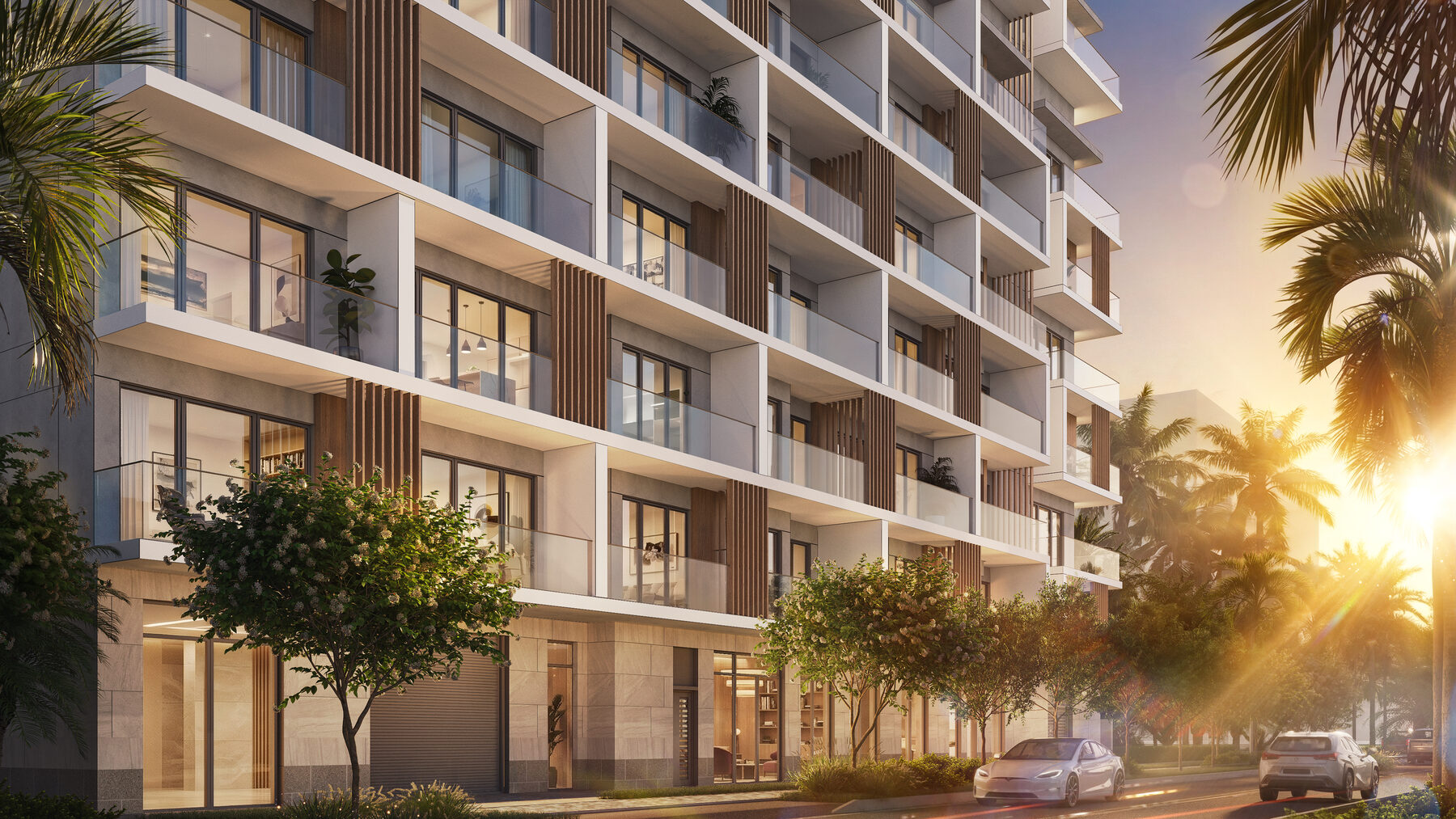
It is a Tuesday in early April, somewhere just after eight in the morning, and the stretch of Brickell between Mary Brickell Village and the bay is already in motion. A woman in running gear passes under a canopy of oaks along the Underline. A delivery cyclist threads between glass towers and valet stands. Two men in linen shirts have taken a corner table at a cafe that did not exist five years ago, discussing something in Portuguese and drinking espresso from small cups. The city is awake, and it is awake on foot.
A generation ago, this scene would have been unthinkable. Brickell in 1995 was a banking district — a five-block corridor of office towers along South Bayshore Drive that emptied at six and did not refill until Monday. You did not live in Brickell. You worked in Brickell, and then you drove home, to Coconut Grove or Coral Gables or Key Biscayne, to the actual neighborhoods where people raised families. Brickell was the commercial shadow of a residential Miami that lay elsewhere.
Twenty-five years later, the inversion is complete. Brickell today is the most densely populated neighborhood in the state of Florida. It is the most international zip code in Miami, the most walkable urban core in the American South, and — by a considerable margin — the most active new-construction market in Florida. The density is not accidental. It is the product of a specific set of planning decisions, migration patterns, and capital flows that took shape over the last fifteen years, and the result is a neighborhood that behaves less like Miami and more like Madrid, Buenos Aires, or Lisbon.
The long arc of the district
Brickell's transformation did not begin with a single building. It began with a zoning change. In 2010 the City of Miami adopted the Miami 21 code, a form-based zoning overhaul that permitted significantly taller residential density across the Brickell corridor in exchange for pedestrian-oriented ground floors, civic open space, and active retail frontage. What followed was roughly a decade of deliberate vertical construction — residential towers, mixed-use blocks, and then, importantly, the 500,000-square-foot Brickell City Centre retail complex, which opened in 2016 and anchored the neighborhood's new identity as something more than offices.
By the time the pandemic arrived in 2020, Brickell had the physical bones of a walkable neighborhood. It had ground-floor retail, sidewalk cafés, an elevated Metromover system connecting to Downtown and the Arts District, and a pedestrian-focused park — the Underline — beginning to take shape beneath the Metrorail line. What it did not yet have was the population to fill it. The pandemic provided exactly that. Miami's net inflow from New York, California, Chicago, and the Northeast tax corridor accelerated through 2020 and 2021, and the majority of that inflow settled in Brickell and its immediate adjacencies.
"Brickell did not become a neighborhood when the towers went up. It became a neighborhood when people started walking between them."— A planning consultant, speaking on condition of anonymity
The population data tells the story cleanly. Between 2010 and 2024, the residential population of the Brickell census tracts grew by roughly 140 percent. The average age dropped. The share of foreign-born residents rose to near 60 percent. And — the detail that most defines the neighborhood now — the share of households without a primary vehicle reached the highest level of any Miami-Dade zip code.
The international neighborhood
If you walk three blocks in any direction from the intersection of Brickell Avenue and Southeast 8th Street, you will pass advertising in Spanish, Portuguese, Italian, French, and increasingly Russian and Mandarin. You will pass a Peruvian rotisserie, an Argentine steakhouse, a Spanish wine bar, a French bakery, an Italian gelateria. The restaurants in Brickell are not themed for tourists; they are built for residents who grew up eating this food at home.
This is the neighborhood's defining asset, and it is the reason the Brickell real estate market behaves differently from the rest of South Florida. The buyer is not primarily a retiree from the Midwest. The buyer is a Brazilian entrepreneur opening a U.S. office, a Colombian family diversifying out of Bogotá, an Italian professional who was working in London and is now working in Miami, a Venezuelan dentist who arrived a decade ago and is now buying a second residence. The transactions are priced in dollars, but the decision-making logic is frequently international.
What the next decade looks like
Three things are already visible. First, the supply of new Brickell residences continues to outpace the supply in any comparable U.S. urban core. Second, the buyer mix continues to shift international. Third — and this is the quieter trend — the physical character of the buildings is beginning to diversify. The decade between 2012 and 2022 produced a certain kind of Brickell residence: 50-story glass tower, two-story lobby, rooftop amenity deck, priced between $700,000 and $4 million. The next decade is producing something else.
Smaller, more human-scaled buildings are being planned and delivered. Eight-story buildings. Mid-block buildings. Buildings with planted balconies rather than sealed glass. Buildings that include furnished studios suitable for a traveling professional who will spend three months of the year in Miami. Buildings that are explicitly permitted for short-term rentals, because the new Brickell buyer is not necessarily planning to live in their residence year-round.
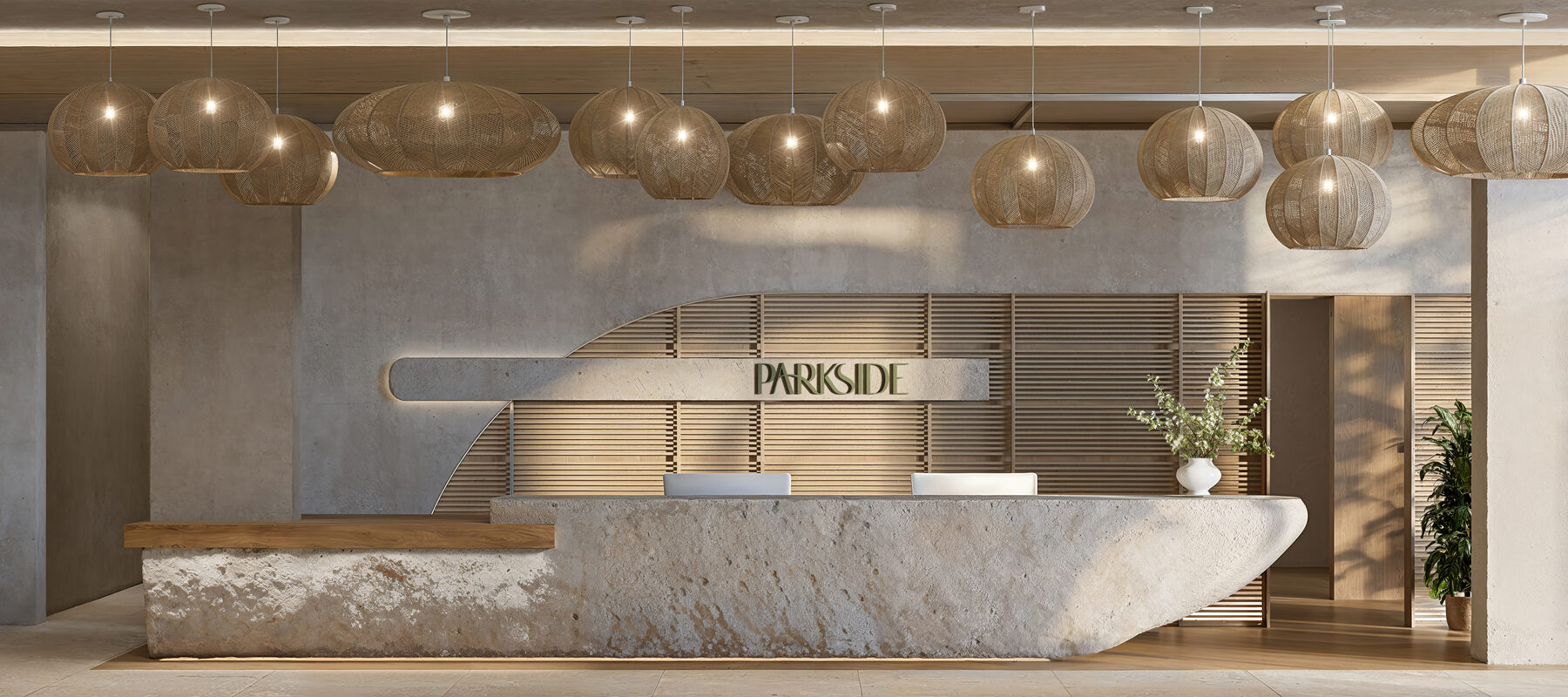
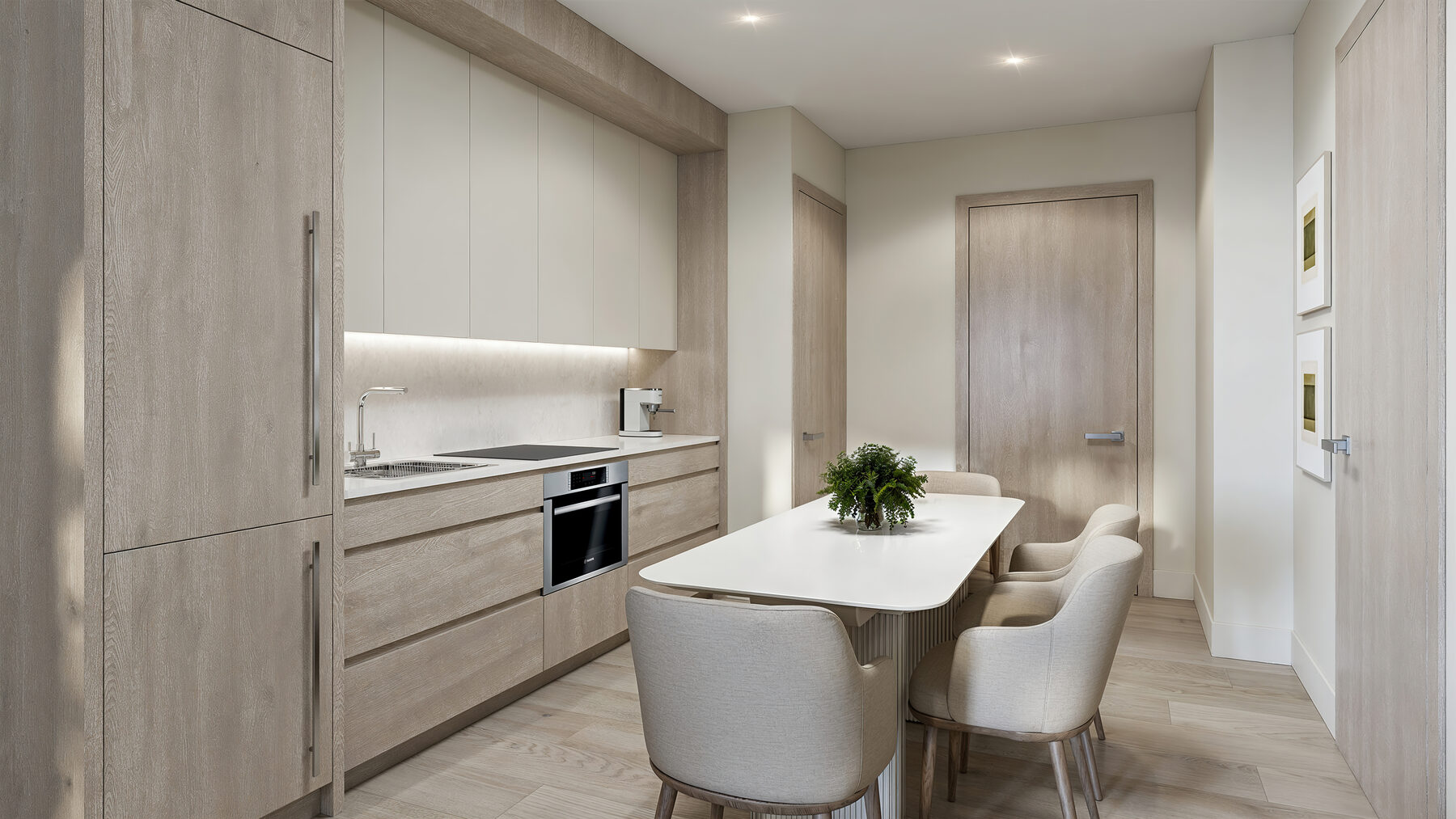
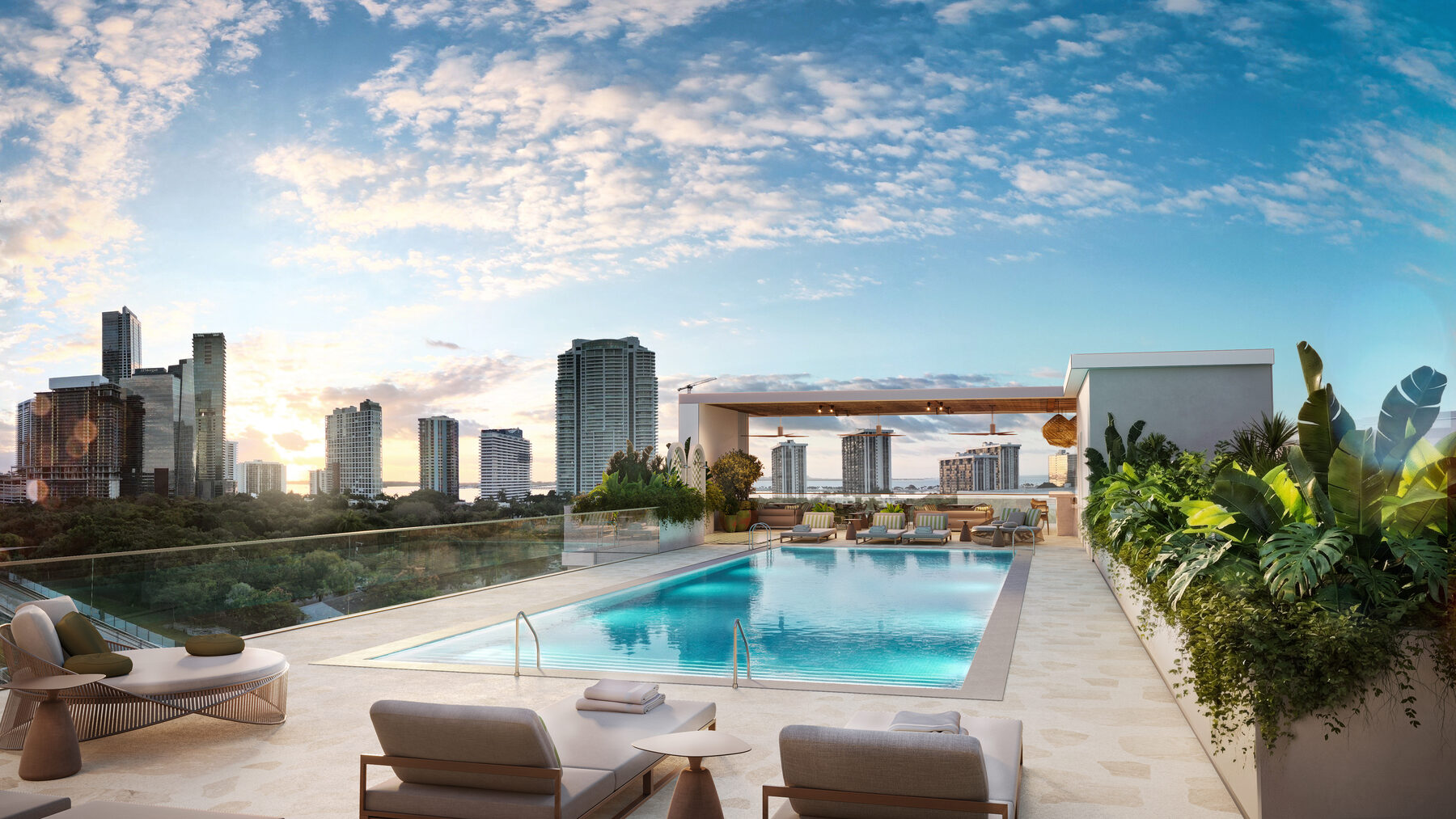
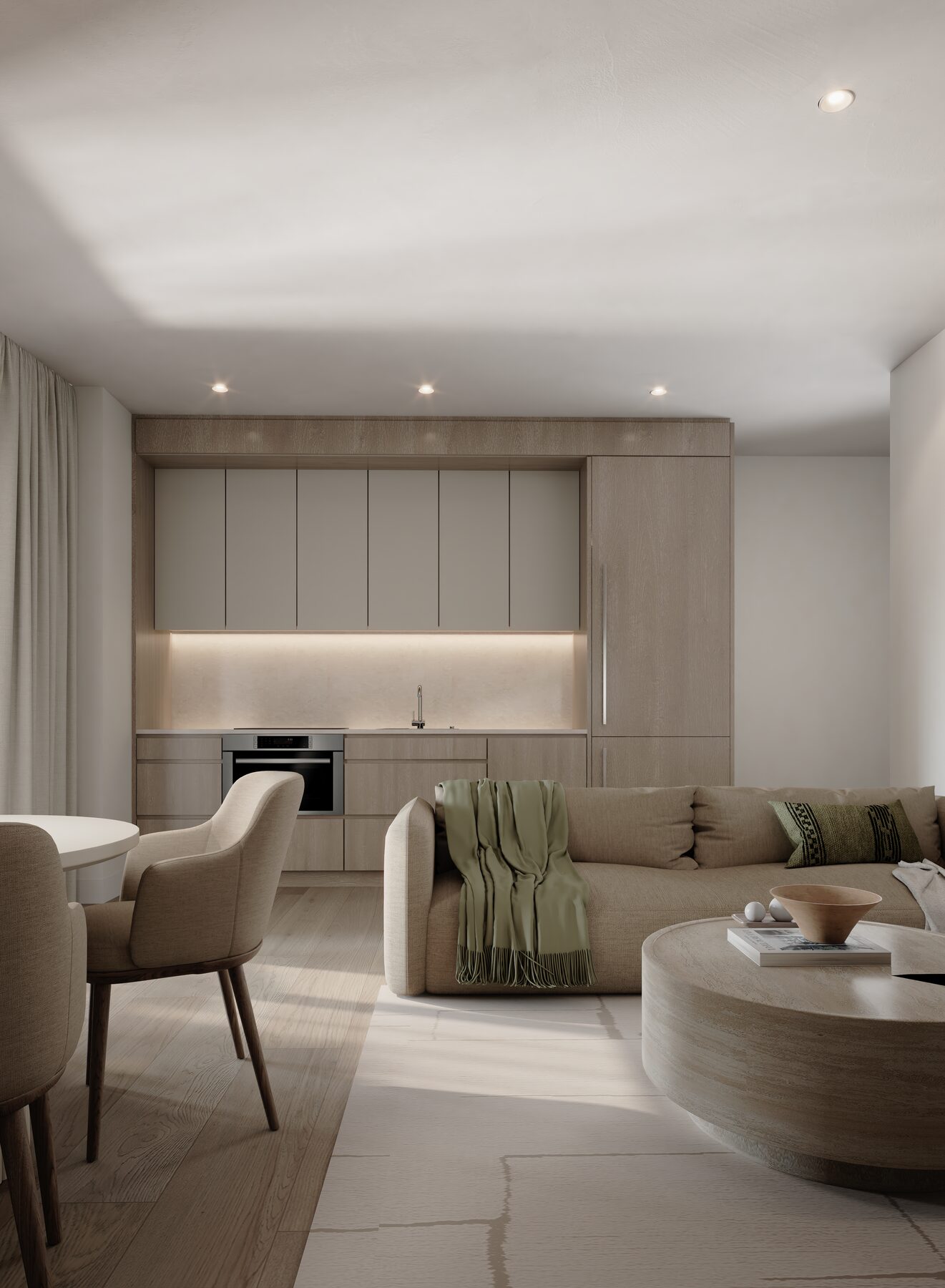
Parkside Residences at Brickell belongs to this second wave. It is an eight-story building — eight, not forty — in a neighborhood that spent its first decade going vertical and is now, usefully, going horizontal. It is a building designed by Kobi Karp, whose Miami portfolio is extensive and whose vocabulary is distinctly Miami-European. The residences are finished and furnished. The amenity package is tuned to wellness. Short-term rentals are permitted.
The quiet argument for Brickell
The argument for Brickell in 2026 is not the argument of 2016. In 2016 the argument was price growth. Buy here, hold ten years, sell into a rising market. That argument has largely played out — Brickell is no longer a discount to Miami Beach or Coral Gables. The argument of 2026 is different. It is an argument about usefulness.
Brickell is useful because it is walkable, and nowhere else in Florida is this walkable. Brickell is useful because it is international, and international is where the capital is flowing. Brickell is useful because its residential stock is finally diversifying — because the family who wants a two-bedroom and the traveler who wants a furnished studio and the investor who wants a short-term-rental unit can now all be served by the same building, on the same block, inside the same pedestrian-scaled neighborhood.
Parkside sits squarely within that argument. It does not try to be the tallest or the most ornate building on its block. It tries to be the most useful one. For a neighborhood that has spent fifteen years learning how to be a neighborhood, that is a meaningful thing to be.
 Architecture · 8 min read
 Investment · 9 min read
 Availability